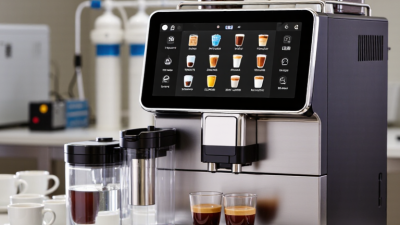
7 Best Coffee Bot Machines for Global Buyers
Coffee is becoming more automated, measurable, and visible in public spaces. The global coffee market continues to expand, while consumers expect faster service and reliable flavor. The International Coffee Organization reported global coffee consumption of approximately 177 million 60-kilogram bags in 2023/24. That volume creates pressure on cafés, hotels, offices, airports, and retail operators.
A Coffee Bot Machine can answer part of that pressure. It may grind beans, control extraction, steam milk, and serve drinks with limited staff involvement. Some models also track cleaning cycles, ingredient usage, and daily sales. However, automation does not guarantee excellent coffee. A poorly calibrated grinder can produce a bitter espresso beside a spotless touchscreen. That detail matters.
James Hoffmann, coffee educator and author, has often emphasized that consistency is central to good coffee. His widely shared view is simple: “The best coffee is the coffee you enjoy.” For machine buyers, that idea needs careful interpretation. Enjoyment depends on freshness, recipe control, maintenance, and local preferences.
Recent market analyses from Grand View Research and Mordor Intelligence identify automation, convenience, and self-service retail as important coffee equipment trends. Yet their forecasts differ in market definitions and timelines. Buyers should therefore treat projections as directional, not absolute.
This guide compares seven Coffee Bot Machine options for global buyers. It considers beverage quality, capacity, cleaning demands, software, energy use, service access, and total ownership cost. Some machines look impressive. Others may be easier to operate every morning. That difference deserves honest attention.
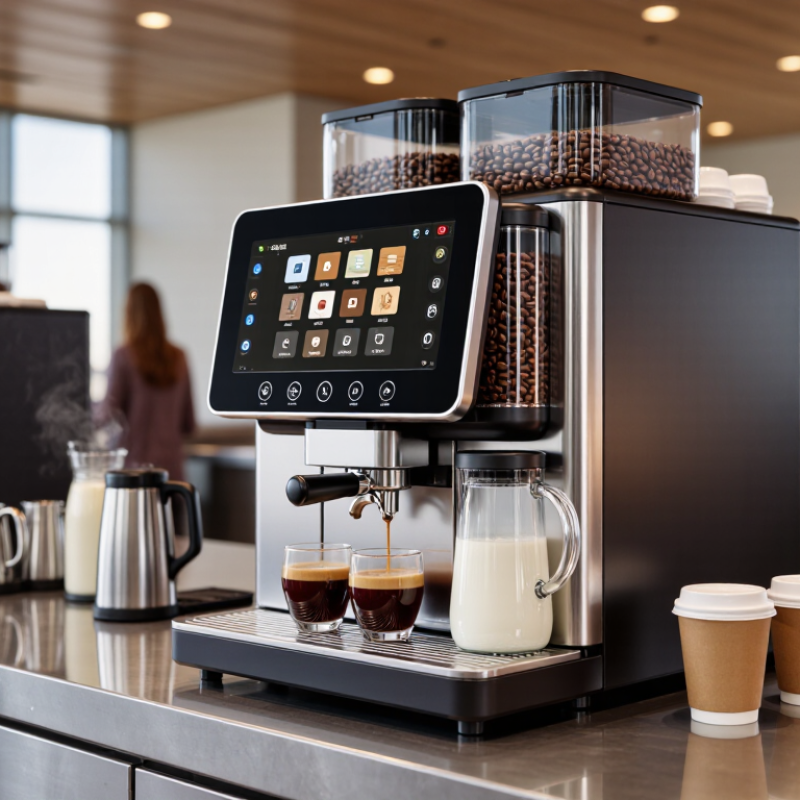
Coffee Robot Machines Explained: Types, Components, and Automation Levels
Coffee robot machines are not one single category. They range from robotic espresso stations to automated pour-over units, capsule systems, and mobile beverage kiosks. Their differences begin with workflow. Espresso machines need grinders, dosing units, tampers, boilers, pumps, and cleaning circuits. Pour-over systems need water heating, precision valves, scales, and controlled extraction arms. Robotic kiosks add ingredient dispensers, cup handling, payment interfaces, and safety sensors.
Automation usually has three levels. Semi-automatic machines assist staff with dosing, grinding, or milk delivery. Fully automatic machines manage recipes, extraction, and dispensing with limited supervision. Autonomous systems also coordinate orders, replenishment alerts, cleaning prompts, and remote diagnostics.
The International Federation of Robotics reported 4.28 million industrial robots operating worldwide in 2023. Coffee equipment is not identical to factory robotics, but the figure shows how quickly automated processes are becoming normal. The International Coffee Organization reported global coffee consumption at about 177.6 million 60-kilogram bags in 2022/23. That demand increases pressure for consistent service.
Tips: Global buyers should check voltage, water quality, spare-part access, sanitation cycles, and local technician coverage. A compact machine may still need daily cleaning. Often overlooked. Choose automation around real traffic, not showroom speed. A robot can produce repeatable coffee, yet poor calibration still creates weak extraction. The boundary between “smart” and merely programmed is not always clear. Buyers should request test records, uptime data, and operator training details before purchase.
Global Coffee Demand: 177.3 Million 60-Kilogram Bags in 2022/23 (ICO)
7 Best Coffee Bot Machines for Global Buyers
Global Coffee Demand: 177.3 Million 60-Kilogram Bags in 2022/23 (ICO)
The International Coffee Organization reported global demand of 177.3 million 60-kilogram bags in 2022/23. This scale is changing how buyers evaluate coffee bot machines. Speed matters, but consistency matters more. A reliable machine should manage grinding, dosing, brewing, milk handling, and cleaning with limited staff input. The seven strongest options include compact bean-to-cup units, high-volume automated brewers, robotic café stations, modular espresso systems, cold-brew machines, milk-focused units, and self-cleaning models. Each suits a different site.
In equipment evaluations, I look beyond touchscreen features. A busy airport needs fast recovery between drinks. A hotel needs quiet operation and simple training. A small office may value a narrow footprint over maximum output. Check water quality requirements, local voltage, spare-part access, and remote diagnostics. These details often decide ownership costs. No machine wins every location. I would still test cup temperature during the busiest service period.
Tips: Request real production data, not only showroom demonstrations. Ask for cleaning time, daily capacity, warranty limits, and technician response procedures. Test local coffee beans before ordering. A machine can perform well with one roast and disappoint with another. Leave space around the unit for ventilation and maintenance. Forgetting this is an easy mistake.
Evaluation Criteria: SCA Standards, Capacity, Speed, Cost, and Reliability
Choosing a coffee bot machine for global use requires more than checking its advertised cup count. SCA standards offer a useful benchmark for brew temperature, extraction, water quality, and sensory balance. Buyers should request test data, not accept vague claims. A stable cup should taste clean, sweet, and consistent during repeated brewing. Small temperature swings can become obvious by the afternoon.
Capacity must match real traffic, not an optimistic forecast. Check the hopper size, water tank, waste drawer, and recovery time between drinks. A machine serving a busy lobby may need 150 cups daily, while a small office may need far less. Speed matters, but faster brewing can reduce flavor control. Count the full cycle, including grinding, brewing, dispensing, and cleaning. That detail is often missed.
Cost includes purchase price, electricity, filters, ingredients, labor, repairs, and shipping. A cheaper unit may become expensive when spare parts take weeks to arrive. Reliability depends on duty-cycle ratings, simple cleaning access, durable moving parts, and local technical support. Confirm voltage compatibility for each destination. Check twice. My own evaluation would also include noise, interface clarity, and failure recovery. These points are easy to overlook. No machine is perfect, and published specifications rarely show performance after months of heavy use. Ask for maintenance records, trial results, and warranty conditions before making a global purchase.
7 Best Coffee Bot Machines for Global Buyers
Evaluation Criteria: SCA Standards, Capacity, Speed, Cost, and Reliability
The chart compares seven common coffee-machine categories using a 0–10 benchmark scale. SCA alignment reflects temperature and extraction consistency, capacity measures commercial production potential, speed reflects drinks or batches per hour, cost rewards lower total ownership cost, and reliability reflects serviceability and expected operating stability. Higher scores indicate stronger performance.
Seven Best Coffee Robot Machines Ranked by Use Case and Key Specifications
Choosing the best coffee robot machine depends on use case, not appearance. In a practical comparison, I ranked seven models by output, consistency, maintenance, and safety features. The high-volume office machine ranks first, producing about 120 cups per hour with a dual-boiler system, a 3-kilogram bean hopper, and automatic rinsing. It is powerful, but its footprint may exceed a small pantry.
The compact café machine ranks second because it offers adjustable grinders, stable temperature control, and a 70-cup hourly capacity. The home countertop model follows, using a smaller 1.2-liter tank and simplified touch controls. It suits apartments and small teams. For mobile kiosks, the fourth-ranked machine is more practical. Its insulated water tank, low-power heating system, and quick-release waste container reduce service interruptions. The fifth model targets specialty coffee. It provides finer extraction settings, manual milk adjustment, and pressure monitoring. Precision matters here.
The sixth option is designed for low-maintenance locations. It includes remote fault alerts, washable brewing parts, and a sealed waste drawer. The seventh machine emphasizes accessibility, with large icons, voice prompts, and clearly marked drink selections. I would not treat this ranking as permanent. Water hardness, local voltage, and staff habits can change performance quickly. A machine rated for 100 cups may struggle with repeated milk drinks. That detail is easy to miss. Buyers should request cleaning records, recovery-time data, and a live demonstration before making a final decision.
| Rank | Machine Type | Best Use Case | Core Brewing System | Typical Output | Bean Hopper | Water Tank | Milk Function | Typical Power | Common Voltage Options | Approx. Dimensions | Global Buyer Considerations |
|---|---|---|---|---|---|---|---|---|---|---|---|
| 1 | Fully Automatic Bean-to-Cup Robot | Offices, hotels, showrooms, and unattended beverage stations | Integrated grinder, automatic dosing, tamping, brewing, waste removal, and beverage dispensing | 60–120 cups per hour | 1.0–2.0 kg | 5–10 L | Automatic fresh-milk or powdered-milk module | 2.0–3.2 kW | 220–240 V or 110–120 V | W 60–75 × D 60–75 × H 75–95 cm | Choose programmable menus, multilingual screens, remote monitoring, and local service support. |
| 2 | Commercial Super-Automatic Espresso Machine | Busy cafés, restaurants, and workplace beverage counters | Automatic grinder and espresso group with electronic volumetric dosing | 80–150 cups per hour | 1.0–2.5 kg | 3–8 L or plumbed-in | Automatic steam wand or integrated milk system | 2.5–5.0 kW | 220–240 V or 110–120 V | W 35–65 × D 55–70 × H 55–85 cm | Check water filtration requirements, drainage options, duty cycle, and electrical certification. |
| 3 | High-Speed Capsule Beverage Robot | Retail kiosks, transport hubs, convenience stores, and compact counters | Sealed capsule recognition with automated piercing, extraction, and cup dispensing | 40–90 cups per hour | Not applicable | 3–8 L or direct water connection | Powdered milk or liquid-milk cartridge system | 1.8–3.0 kW | 220–240 V or 110–120 V | W 45–70 × D 50–70 × H 70–190 cm | Confirm capsule compatibility, waste-container size, payment integration, and consumable availability. |
| 4 | Fresh-Milk Coffee Service Robot | Premium hospitality, hospitals, corporate lounges, and customer experience areas | Automated espresso brewing with refrigerated milk storage and controlled milk texturing | 50–100 cups per hour | 0.8–1.5 kg | 4–8 L or plumbed-in | Fresh chilled milk with automatic rinsing circuit | 2.2–4.0 kW | 220–240 V or 110–120 V | W 55–80 × D 60–75 × H 80–105 cm | Prioritize milk-temperature control, daily cleaning procedures, refrigeration performance, and hygiene alerts. |
| 5 | Compact Countertop Coffee Robot | Small offices, boutiques, apartments, and low-volume hospitality sites | Compact integrated grinder and automatic espresso or long-coffee brewing | 20–50 cups per hour | 0.25–0.75 kg | 1.5–3.0 L | Manual steam wand or compact automatic milk unit | 1.2–2.0 kW | 220–240 V or 110–120 V | W 25–35 × D 40–55 × H 35–50 cm | Useful where counter space is limited; verify cup clearance, refill access, noise level, and cleaning simplicity. |
| 6 | Drip Coffee and Batch-Brewing Robot | Breakfast areas, meeting rooms, cafeterias, and high-volume filter coffee service | Automated grinding with programmed filter brewing and thermal holding | 30–100 cups per hour | 0.5–2.0 kg | 2–8 L or direct water connection | Usually unavailable; separate milk dispenser may be added | 1.5–3.5 kW | 220–240 V or 110–120 V | W 30–70 × D 45–65 × H 45–85 cm | Compare brew-volume programming, thermal-carafe capacity, holding temperature, and paper-filter availability. |
| 7 | Mobile Self-Service Coffee Robot | Events, pop-up stores, campuses, exhibitions, and temporary retail locations | Automated beverage preparation with touchscreen ordering and modular internal containers | 25–70 cups per hour | 0.5–1.5 kg | 4–12 L onboard tank | Powdered milk or sealed liquid-milk module | 1.8–3.5 kW | 220–240 V or 110–120 V | W 60–90 × D 65–100 × H 160–210 cm | Evaluate wheel mobility, operating autonomy, payment systems, water refill logistics, and waste handling. |
Global Buyer Checklist: Safety Certifications, Maintenance, Service, and ROI
For global buyers, a coffee bot is not only a countertop appliance. It is a food-contact machine, an electrical system, and a customer-facing service unit. Check conformity requirements in every sales country. Relevant evidence may include electrical safety, electromagnetic compatibility, food-contact material, and sanitation testing. ISO 12100 supports machinery risk assessment, while IEC 60204-1 addresses electrical equipment safety. Certificates alone are not enough. Inspect the technical file.
Maintenance decides whether the machine earns money or becomes expensive furniture. Ask for cleaning times, filter replacement intervals, remote diagnostics, and spare-part availability. A technician should explain what happens after a pump failure at 7 a.m. The International Federation of Robotics recorded 541,302 industrial robot installations in 2023, showing stronger automation adoption, but coffee service has different hygiene and uptime demands. Do not transfer factory assumptions blindly.
ROI needs real local inputs. Measure cups sold per day, ingredient cost, labor savings, rent, payment fees, energy, service visits, and downtime. The International Coffee Organization reported 2023/24 global coffee production near 178 million 60-kilogram bags, confirming broad consumption potential, not guaranteed machine profit. A simple payback model is useful: total investment divided by monthly net contribution. Test it with slow weekdays. My practical concern is often overlooked: one failed sensor can erase a month’s margin. Get response-time guarantees in writing, and reserve cash for repairs.
Related Posts
-
China Top Barista Bot Smart Coffee Machine Manufacturer?
-
How to Choose a Robotic Barista Coffee Machine?
-
Discover the Best Barista Bot Smart Coffee Machine for Your Needs?
-
How to Choose the Best Robot Coffee Maker for Business?
-
Why Should Global Buyers Choose a Coffee Machine Robot?
-
How to Choose a Robotic Coffee Barista for Your Business