China Top Barista Bot Smart Coffee Machine Manufacturer?
Choosing a China Top Barista Bot Smart Coffee Machine Manufacturer requires more than comparing sleek screens and advertised drink speeds. The real test begins behind the showroom: stable extraction, accurate milk temperature, reliable cleaning cycles, and consistent performance during busy service. A machine may look impressive at 8 a.m. and struggle after hundreds of orders. That difference matters.
Coffee scientist Christopher Hendon has often emphasized, “Water is the most important ingredient in coffee.” His point applies directly to automated coffee systems. A capable Barista Bot Smart Coffee Machine needs controlled water quality, precise brewing pressure, steady temperature, and repeatable dosing. These details shape the cup, not just the machine’s appearance. Buyers should also examine factory testing, component suppliers, software updates, operator training, and after-sales support.
Experience reveals uncomfortable gaps. A polished demonstration cannot prove long-term reliability. A low price may hide weak pumps, limited service coverage, or difficult-to-source parts. Some manufacturers also describe automation too confidently. Human judgment still matters when beans change, milk behaves differently, or customer preferences shift. Therefore, this guide will examine Chinese manufacturers through practical evidence, technical capability, customization depth, hygiene design, certifications, and customer feedback. The strongest supplier is not necessarily the largest. It is the partner that documents performance, admits limitations, and improves after problems appear. That standard may sound demanding, but coffee businesses depend on it every morning.
What Is a Barista Bot Smart Coffee Machine?
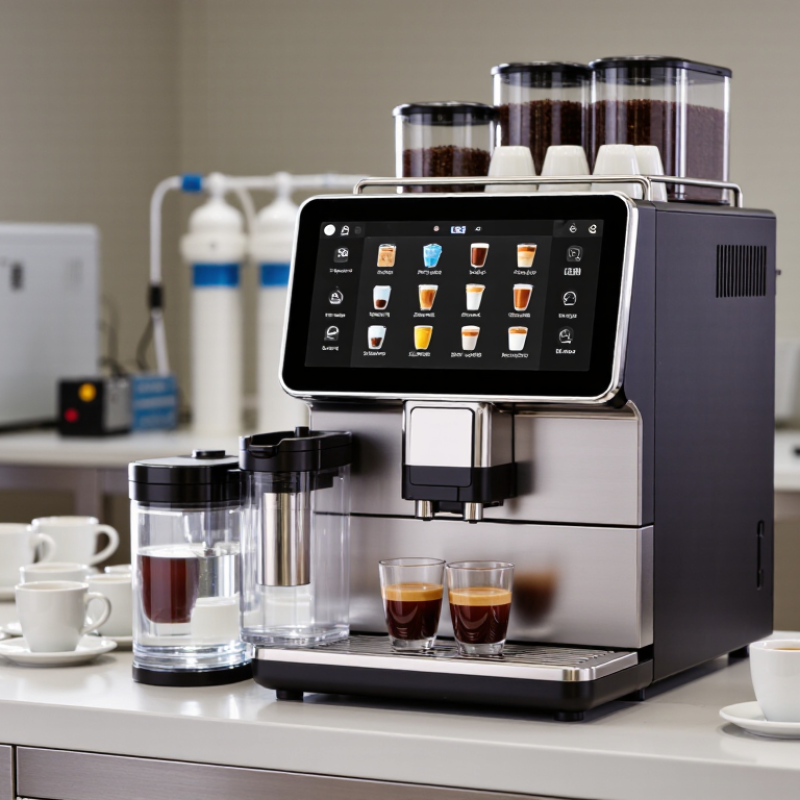
A barista bot smart coffee machine is an automated system that prepares café-style drinks through programmed steps. It may grind beans, dose coffee, control water temperature, brew espresso, and dispense milk or foam. Sensors and software help repeat these steps with less manual input.
The term “barista bot” is not a single technical standard, so features vary. Some machines automate only brewing; others coordinate a fuller drink-making process. Small details matter.
The National Coffee Association’s 2024 National Coffee Data Trends report found that 67% of U.S. adults drank coffee daily. That figure describes consumer habits, not demand for robotic machines. Still, it helps explain why consistent preparation can matter in busy cafés, offices, and hospitality settings.
A machine may reduce repetitive work, but it cannot automatically fix stale beans, poor water, or incorrect settings. Not magic.
In practical use, an operator loads beans and milk, selects a recipe, and checks the cup. A good system should make cleaning steps clear and allow adjustments to dose, temperature, and extraction time. Those controls matter when beans change or the room gets warmer.
The machine also needs routine maintenance, including cleaning milk lines and checking grinders. One honest limitation: automation can improve repeatability, but taste still depends on ingredients, calibration, and human judgment.
How China Manufactures Automated Coffee Machines
Automated coffee machines in China are built through coordinated work between mechanical, electrical, and software teams. Production often begins with a product brief covering cup size, daily volume, water source, and cleaning needs. Engineers select a grinder, pump, boiler, valves, sensors, and control board to meet those requirements and the target cost. Small details matter. A loose hose clamp can cause leaks, while uneven burr alignment can change the grind.
Metal housings may be cut, bent, and finished locally; plastic panels are molded and checked for fit. Assembly teams connect the water circuit, wiring harness, brewing group, display, and ordering interface. Technicians test temperature stability, flow rate, electrical safety, and cleaning cycles. Not every unit feels identical. Calibration still depends on careful setup, and rushed inspections can miss noisy grinders or slow drainage.
Reliable manufacturers document component sources, batch numbers, test results, and corrective actions. Buyers can request sample-machine trials and review service access, spare-part availability, and software update procedures. Factory capacity alone does not prove quality; a busy production line can still produce avoidable variation. That is worth checking. Clear drawings and realistic acceptance criteria help both sides identify problems before shipment.
China’s Automated Coffee Machine Manufacturing: Precision Brewing Targets
A common espresso brewing reference is an extraction time of about 25–30 seconds. Automated machines can control timing alongside variables such as dose, water temperature, and pressure. These are general brewing guidelines, not China-specific factory measurements.
Core Technologies Behind Barista Bot Systems
China Top Barista Bot Smart Coffee Machine Manufacturer?
Core Technologies Behind Barista Bot Systems
A barista bot depends on coordinated sensing, control, and repeatable mechanics. A camera can check cup position and detect visible changes in a drink, while load cells measure coffee dose and beverage weight. A burr grinder with adjustable settings helps control particle size; however, beans age, so one fixed setting will not always deliver the same extraction. The International Coffee Organization estimated global coffee consumption at 177 million 60-kilogram bags in 2023/24. That scale makes dependable, serviceable equipment important—not just impressive demonstrations.
Temperature and pressure control shape the result. A PID controller can adjust heating based on sensor feedback, while flow meters and pressure sensors help detect inconsistencies during extraction. A motion system must position the portafilter or cup accurately, yet small alignment errors can still cause spills. Software ties these components together, records performance, and flags maintenance needs. The National Coffee Association’s 2024 National Coffee Data Trends report found that 67% of U.S. adults had coffee in the previous day. This signals frequent use, but it does not prove every customer wants automated service.
Tips: Test with different roast ages, cup sizes, and busy-service conditions. Log dose, temperature, and extraction time. Then check the actual cup. Sensors can miss taste. That part still needs human review.
Key Features and Applications in Coffee Service
A top barista bot smart coffee machine should solve real service problems, not only look futuristic. The International Coffee Organization estimated global coffee consumption at 177 million 60-kilogram bags in 2022/23. Demand is large and increasingly convenience-driven. In the United States, the National Coffee Association’s Spring 2024 report found that 67% of adults drank coffee during the previous day.
Consistency matters.
A commercial machine should grind beans on demand, control water temperature, and adjust extraction time through programmable recipes. A clear touchscreen can guide customers through espresso, Americano, milk coffee, and iced drinks. Sensors should monitor bean levels, water supply, brewing pressure, and cleaning status. In a busy lobby, a cup should be ready with minimal staff intervention. It also needs a stable steam system, accurate dosing, and removable food-contact parts for daily sanitation.
Applications include offices, hotels, transport hubs, restaurants, and self-service counters. Remote monitoring can record drink volume, error codes, and cleaning cycles. These records support maintenance decisions and reduce avoidable downtime. However, automation is not perfect. Milk temperature may vary, and poorly calibrated grinders can produce bitter or weak coffee. Staff still need basic training and regular taste checks. The Specialty Coffee Association emphasizes controlled variables, including dose, yield, time, and water quality. A reliable manufacturer should provide calibration guidance, service access, and transparent performance data. The smartest machine is not always the most complex one.
How to Evaluate a Chinese Coffee Machine Manufacturer
Choosing a Chinese coffee machine manufacturer requires more than a low quotation. Assess its engineering process, component sourcing, and ability to produce consistent extraction across batches. Ask how each machine is tested, including boiler stability, pump pressure, temperature recovery, and milk-steaming performance. A polished showroom demonstration is useful, but it cannot prove long-term reliability.
Request a factory walk-through or a detailed video showing assembly and final inspection. Review technical documents, warranty terms, spare-parts availability, and service response times. For a smart or robotic model, test sensor accuracy, cleaning steps, software updates, and how the machine behaves if its connection drops. Ask for references from buyers with similar daily volumes, not just attractive product photos. Small details matter. An easier-to-clean machine may serve a busy café better than a faster, harder-to-maintain unit.
Tips: Begin with a written sample order. Compare the delivered machine with agreed specifications, packaging, noise levels, and drink consistency. Keep one question open: supplier assurances cannot replace your own hands-on trial.
| Evaluation Dimension | What to Check | Evidence to Request | Practical Evaluation Criteria |
|---|---|---|---|
| Product and automation capability | Assess whether the machine can perform the required steps, such as grinding, dosing, brewing, milk preparation, cleaning prompts, and order handoff. | Operating video, machine specification, process diagram, and a live demonstration using your intended menu and workflow. | Run representative drink recipes repeatedly. Record cycle time, failed cycles, manual interventions, and consistency against your written requirements. |
| Beverage quality and repeatability | Check shot or brew parameters, beverage temperature, recipe control, milk texture, and the ability to save and reproduce settings. | Recipe-control documentation, calibration instructions, test samples, and results from repeated drinks made on the same configuration. | Define acceptable ranges for each drink before testing. Compare repeated samples using the same beans, water, recipe, and operating conditions. |
| Rated capacity and peak-hour performance | Verify whether the stated output accounts for grinding, brewing, milk preparation, rinsing, and recovery between drinks. | Rated-output basis, timed demonstration, boiler or heating-system specifications, and a test plan for your expected menu mix. | Measure completed drinks per hour during a continuous test. Confirm that the test includes realistic drink sequences rather than a single repeated recipe. |
| Food-contact materials and hygiene | Identify materials that contact water, coffee, milk, or other ingredients, and review cleaning access and residue-prone areas. | Material declarations, applicable food-contact compliance documents for the destination market, cleaning instructions, and descaling guidance. | Check that documents cover the actual model and relevant wetted parts. For EU sales, ask about applicable requirements including Regulation (EC) No 1935/2004. |
| Electrical and market compliance | Confirm that the exact machine configuration is suitable for the destination country's voltage, frequency, plug, and regulatory requirements. | Test reports and certificates for the exact model, nameplate details, wiring information, and a list of included or optional components. | Verify applicable editions and national requirements with the relevant conformity-assessment body or importer. IEC 60335-1 and the applicable appliance-specific part may be relevant, depending on the machine type and market. |
| Factory quality control | Review incoming-part checks, assembly controls, software or recipe loading, final inspection, and handling of defects. | Quality-management certificate if held, inspection checklist, sample production records, defect-handling procedure, and permission for a pre-shipment inspection. | Check that inspection records are traceable to the model or production batch. Do not treat a management-system certificate as proof that every unit meets your specification. |
| Reliability and maintainability | Inspect access to wear parts, service tools, cleaning routines, fault codes, and the replacement process for major components. | Maintenance schedule, spare-parts list, service manual, warranty terms, and reliability-test method or available test records. | Agree in writing on warranty scope, response times, replacement-part availability, and who pays shipping and labor. Test routine cleaning and common maintenance tasks on a sample unit. |
| Software, connectivity, and data | Review remote monitoring, payment or ordering integrations, software updates, access controls, and what operational data is collected. | Interface documentation, integration requirements, update policy, data-storage details, and a demonstration of administrator and operator permissions. | Test the required integrations in your own environment. Confirm ownership, access, retention, and export options for machine and customer data before ordering. |
| Customization and production readiness | Determine which changes are standard options and which require engineering work, tooling, software changes, or additional validation. | Written scope, drawings or interface specifications, sample approval plan, change-control process, and quotation that separates one-time and per-unit costs. | Approve a production-representative sample before mass production. Record agreed dimensions, components, finishes, firmware version, and acceptance tests in the purchase specification. |
| Commercial terms and supplier communication | Compare minimum order quantity, lead time, payment milestones, packaging, shipping terms, and escalation contacts. | Itemized quotation, production schedule, packaging details, sample and tooling charges, and written after-sales support terms. | Check that quotations use the same configuration and delivery basis. Confirm responsibilities for export documentation, installation support, and post-delivery claims. |
| Overall decision | Use a weighted scorecard only after the machine and supplier pass mandatory safety, quality, and commercial checks. | Completed test records, verified documents, approved sample, and signed technical and commercial specifications. | Pass / Conditional / Fail Define pass thresholds for your project in advance; there is no universal performance score that suits every café, office, or vending application. |
Related Posts
-
How to Choose the Best Robot Coffee Maker for Business?
-

Why Should Global Buyers Choose a Coffee Machine Robot?
-
Discover the Best Barista Bot Smart Coffee Machine for Your Needs?
-
Understanding Industry Standards for Best Coffee Robot Machines to Streamline Your Procurement Process
-

How to Choose the Best Barista Robot for Your Coffee Needs in 2023
-

2025 Automation Trends: How Robot Arm Coffee Machines Will Revolutionize the Beverage Industry